
The Bug Room
White Spotted Chafer (Oxythyrea funesta)
White Spotted Chafer (Oxythyrea funesta)
Couldn't load pickup availability
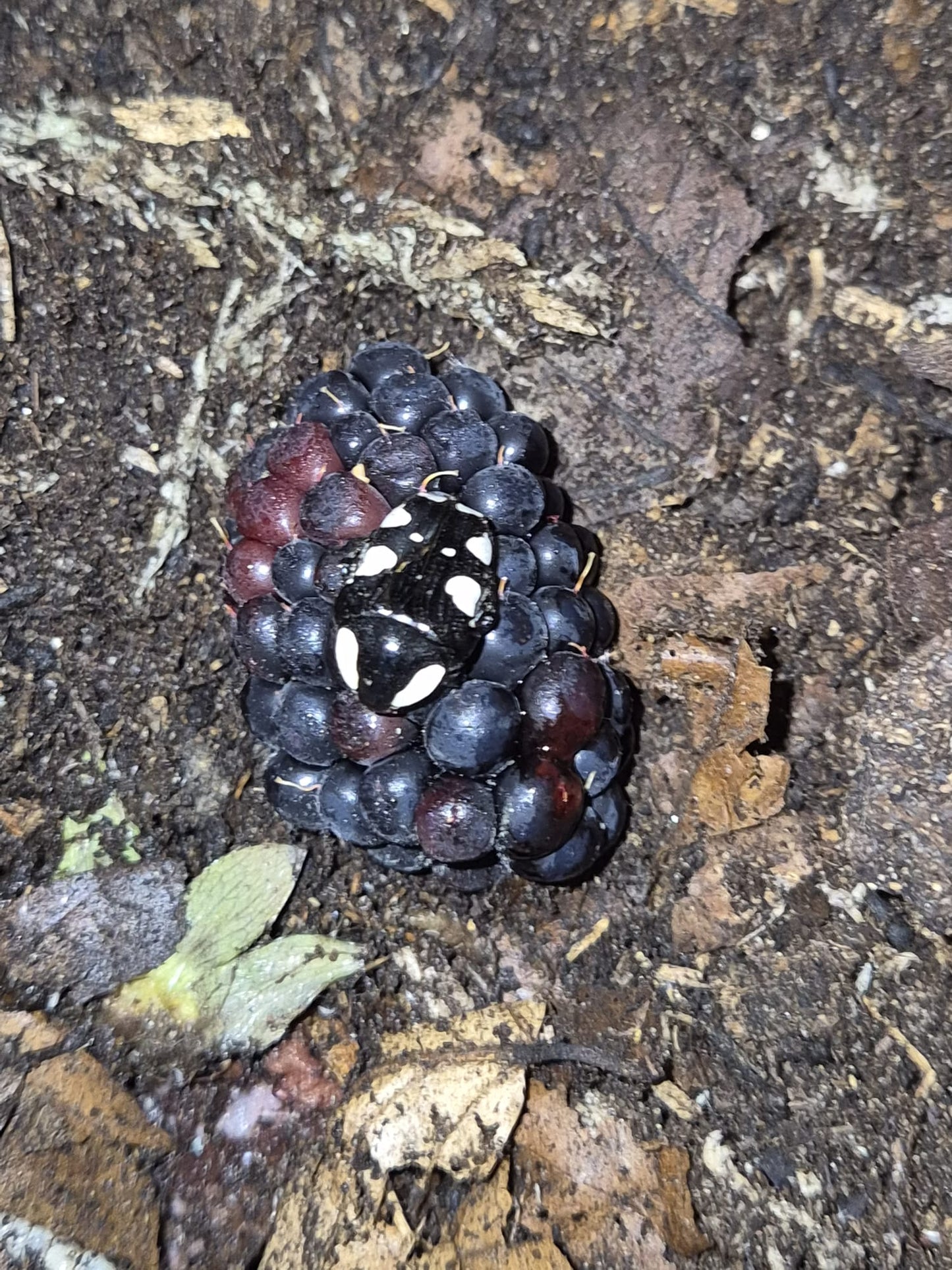
The White-Spotted Chafer (Oxythyrea funesta) is a striking member of the scarab beetle family, prized for its glossy black-to-bronze body, contrasting white markings and fine covering of pale hairs.
Growing to around 8–12 mm, adults have a distinctive pattern of white spots across the pronotum and wing cases. Fresh specimens are particularly attractive, with the fine white hairs giving the beetle a slightly velvety appearance. As adults age, these hairs can gradually wear away.
Native across much of Europe and parts of the Palearctic, Oxythyrea funesta is a diurnal, warm-loving species that is commonly associated with flowers. Adults feed primarily on pollen, nectar and floral material, making them fascinating to observe when active.
Life Cycle
The larvae are soil-dwelling grubs and develop underground, feeding on organic material and plant matter. Mature larvae can reach approximately 16–22 mm before forming a pupal cell in the soil. Adults emerge during the warmer months and are most active in spring and summer.
Key Features
Scientific name: Oxythyrea funesta
Common names: White-Spotted Chafer / White-Spotted Rose Beetle / Mediterranean Spotted Chafer
Adult size: Approximately 8–12 mm
Family: Scarabaeidae
Activity: Diurnal and most active in warm conditions
Appearance: Glossy black/bronze with distinctive white spots
Diet: Adults feed on pollen, nectar and floral material
Larval stage: Soil-dwelling grub
Distribution: Widespread across Europe and parts of the Palearctic
A fantastic species for beetle enthusiasts and invertebrate keepers looking to add something unusual and visually distinctive to their collection.
Share